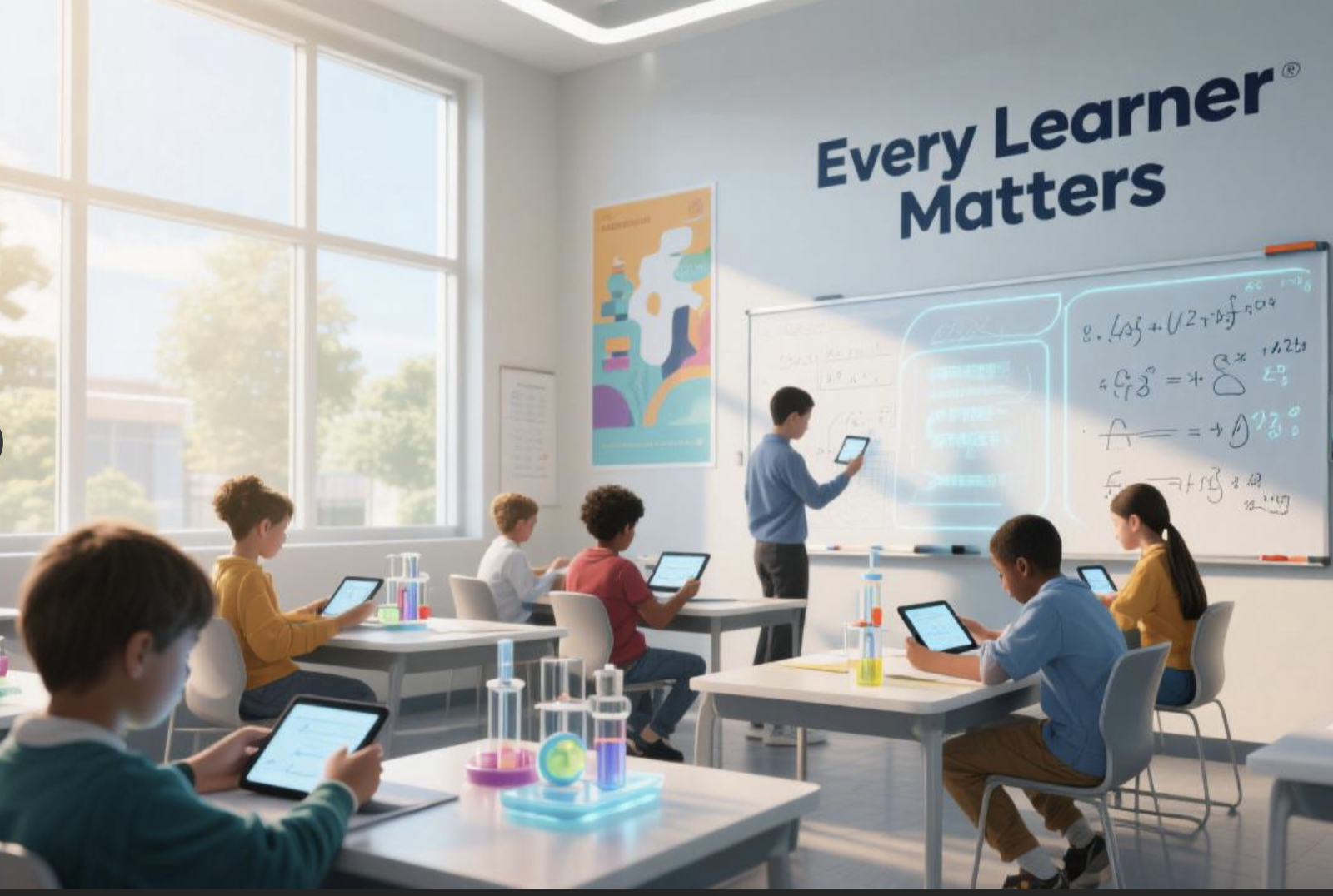
For decades, the Australian classroom followed a fairly rigid script. You’d sit in a row of desks, open the same textbook as the person next to you, and listen to a lecture designed for the “average” student. But as any educator or student in Sydney or Melbourne will tell you, the “average” student is a myth. Everyone has a different pace, a unique background, and distinct hurdles to clear.
In 2026, we are witnessing the final days of this factory-model approach. The shift toward hyper-personalized learning isn’t just a tech trend; it’s a necessary evolution in how we nurture human potential. By tailoring the educational journey to the individual, we aren’t just helping kids pass exams—we’re helping them actually master the material.
The Problem with the Traditional Sandbox
The traditional model of education was built for the industrial age—a time when the goal was to produce a workforce that could follow standardized instructions. In that world, if a student didn’t “get” a concept in the allocated three-week window, the class moved on anyway. The result? Gaps in foundational knowledge that grow into massive craters by the time a student reaches university.
Hyper-personalized learning flips this on its head. It focuses on Competency-Based Progress. Instead of moving to the next chapter because the calendar says so, students move forward only when they have truly mastered the current task. This prevents the “snowball effect” of confusion that leads many to feel they simply aren’t “smart enough” for a particular subject.
Data as the Compass, Not the Warden
One of the biggest drivers of this change is the sophisticated use of data analytics. We’re no longer just looking at a grade at the end of a term. Modern learning platforms can track how a student interacts with a problem. Do they struggle with the logic of a physics equation, or is it the vocabulary of the word problem that trips them up?
When an educator has this level of insight, they can intervene before a student loses confidence. However, even with the best technology, the workload on students remains high. Sometimes, the sheer volume of tailored tasks can feel overwhelming. In these moments, many students find that they need help with assignment structures to better organize their new, individualized study plans.
The Role of Adaptive Technology in Technical Fields
Nowhere is hyper-personalization more evident than in technical disciplines like coding and software engineering. If you’re learning Python, for example, a one-size-fits-all tutorial is almost useless. One student might have a natural flair for front-end logic, while another excels at back-end database management.
In Australian universities, we’re seeing a massive uptick in adaptive coding platforms. These systems adjust the difficulty of a challenge in real-time based on the user’s syntax errors and logic flow. But even the smartest software can’t replace a human mentor when you’re stuck on a complex debugging issue. This is why many aspiring developers seek out programming assignment help to get a deeper, one-on-one explanation of the “why” behind the code, rather than just the “how.”
Why the “Human Element” is More Important Than Ever
There is a common misconception that personalized learning means replacing teachers with screens. In reality, it’s the opposite. By automating the repetitive parts of teaching—like grading basic multiple-choice quizzes or providing routine drills—teachers are freed up to do what they do best: mentor, inspire, and provide emotional support.
The teacher’s role shifts from a “sage on the stage” to a “guide on the side.” In a hyper-personalized environment, a teacher in a Perth high school can spend twenty minutes sitting with a struggling student because the rest of the class is engaged with material that is perfectly leveled to their specific needs.
The Economic Argument for Custom Education
From a broader perspective, the move away from standardized education is an economic necessity for Australia. Our future economy relies on innovation and critical thinking—traits that are often stifled by rote learning. When we allow students to dive deep into their interests—whether that’s renewable energy, local history, or game design—we cultivate a workforce that is genuinely passionate and highly specialized.
Furthermore, personalized learning reduces the “attrition rate” in higher education. When students feel that their education is relevant to their specific career goals and compatible with their learning style, they are far more likely to complete their degrees and contribute meaningfully to the economy.
Overcoming the Implementation Gap
Of course, the transition isn’t without its hiccups. The primary challenge is the “Digital Divide.” For hyper-personalized learning to be truly effective, it must be accessible to students in regional and remote communities, not just those in elite metropolitan schools. Government investment in high-speed infrastructure and device programs is the backbone that will make this educational revolution equitable.
We also need to rethink how we measure success. If education is personalized, can a standardized ATAR score truly reflect a student’s worth? We are likely moving toward a “Digital Portfolio” model, where students showcase a collection of their best work, projects, and certifications rather than a single number from a three-hour exam.
Conclusion
The “one-size-fits-all” era was a product of its time, but its time has passed. By embracing hyper-personalized learning, we are finally acknowledging that every brain is wired differently. We are moving toward a future where education is a bespoke suit, tailored to the unique dimensions of every learner.
It’s a more challenging way to teach and a more intense way to learn, but the results—higher engagement, better retention, and a genuine love for discovery—are undeniably worth the effort.